Live forecast for Penrith is temporarily unavailable. Please try again shortly.
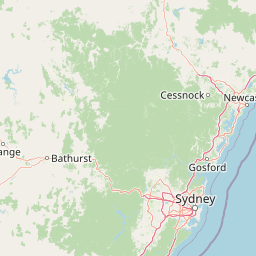
Penrith sits at the foot of the Blue Mountains, 55 kilometres west of the Sydney CBD, making it the furthest major suburb from the coast in the metropolitan area. This extreme western position gives Penrith a climate closer to inland NSW than coastal Sydney. Summer maximums average 32-34 degrees Celsius and routinely exceed 40 degrees during heatwaves, with Penrith holding Sydney's all-time temperature record of 48.9 degrees set in January 2020. Winter nights regularly drop to 2-4 degrees, with frost forming on 20-25 mornings per year across the Nepean River floodplain.
Annual rainfall in Penrith averages around 800 millimetres, the lowest of any major Sydney suburb and roughly two-thirds of the coastal average. Despite this lower total, Penrith's rainfall can be extraordinarily intense. The Blue Mountains to the west act as an orographic barrier, enhancing rainfall from east coast lows and tropical moisture surges. When these systems align, the Nepean River and its tributaries can flood rapidly. The March 2021 and July 2022 floods saw the Nepean break its banks through Penrith, inundating riverside suburbs and the rowing course at Penrith Lakes. Summer thunderstorms contribute roughly 40 percent of annual rainfall, often arriving as dramatic late-afternoon squalls that sweep down from the ranges.
Penrith's extreme summer heat results from several converging factors. Hot air descends from the Blue Mountains via the foehn effect, warming as it compresses to lower elevations. The flat terrain of the Cumberland Plain offers no topographic barrier to this heated air. The Nepean River and its former gravel extraction lakes provide insufficient water surface to cool the air mass. Urban expansion has replaced native woodland with heat-absorbing residential development. The afternoon sea breeze from the coast almost never reaches Penrith, blocked by 55 kilometres of urban terrain and the thermal barrier of the heated western suburbs. On extreme days, Penrith can be 15 degrees hotter than Bondi.
Penrith's severe weather portfolio is extensive. Extreme heat is the primary health risk, with heatwave events causing significant mortality among elderly residents. Flash flooding from the Nepean, South Creek, and Ropes Creek systems threatens both residential and commercial areas. Supercell thunderstorms produce the most dramatic events, with large hail, destructive winds, and intense rainfall all possible between October and March. Penrith sits at the intersection of Sydney's hail corridor and the thunderstorm-generating convergence zone near the mountains. Bushfire risk is elevated on the western fringe where suburbs meet Blue Mountains bushland, particularly during hot, dry northwesterly wind events.
Penrith's seasons are pronounced compared to coastal Sydney. Spring arrives dramatically with rapid warming from September, wildflowers across the Nepean bushland, and the first thunderstorms of the season. Summer is dominated by the daily cycle of morning calm, afternoon heat, and evening storms or sea-breeze relief (when it comes). Autumn brings a welcome cool-down, with March and April offering the most comfortable outdoor conditions, clear skies, moderate warmth, and low humidity. Winter is genuinely cold by Sydney standards, with crisp mornings, occasional fog along the river, and mountain views that can include snow on the higher peaks after cold fronts.
The climate contrast between Penrith and Sydney's coastal suburbs is among the most extreme within any Australian capital. Penrith averages 25-30 more days above 35 degrees than Bondi and 15-20 more frost nights than any harbour-front suburb. Rainfall totals at Penrith are 30-40 percent lower than the coast, yet individual storm events can be more intense. Wind speeds are generally lower in Penrith due to its sheltered basin position, though thunderstorm downbursts can produce locally destructive gusts. The Nepean River valley creates a cold-air drainage path that makes Penrith's overnight lows 3-5 degrees lower than suburbs just 10 kilometres east on the ridge. This stark climate gradient across just 55 kilometres makes Sydney one of the most weather-diverse cities on Earth.
See how Penrith's weather compares to its neighbours: Blacktown weather, Parramatta weather and Liverpool weather. Or browse all Sydney suburb forecasts.